While we’ve seen an uptick in return-to-work mandates, remote and hybrid work remains a reality for millions of Americans. According to the Bureau of Labor Statistics, 35% of full-time employees did “all or some” of their work at home in 2025. What does this mean for effective remote employee engagement?
People’s experiences with virtual work vary widely. Many consider it a relief, a chance for flexibility, a shortened commute, and increased productivity. (And let’s not forget about sweatpants, the real victor of remote work.) For employees who don’t feel that they can be their authentic selves in the workplace, working from home reduces the pressure to “code switch” and try to fit in.
Even if people don’t necessarily perceive it, remote work creates psychological and social effects. A lack of regular face-to-face interaction with colleagues can cause isolation or feelings of depression. A significant challenge of remote work is the blurred boundary between work and home life.
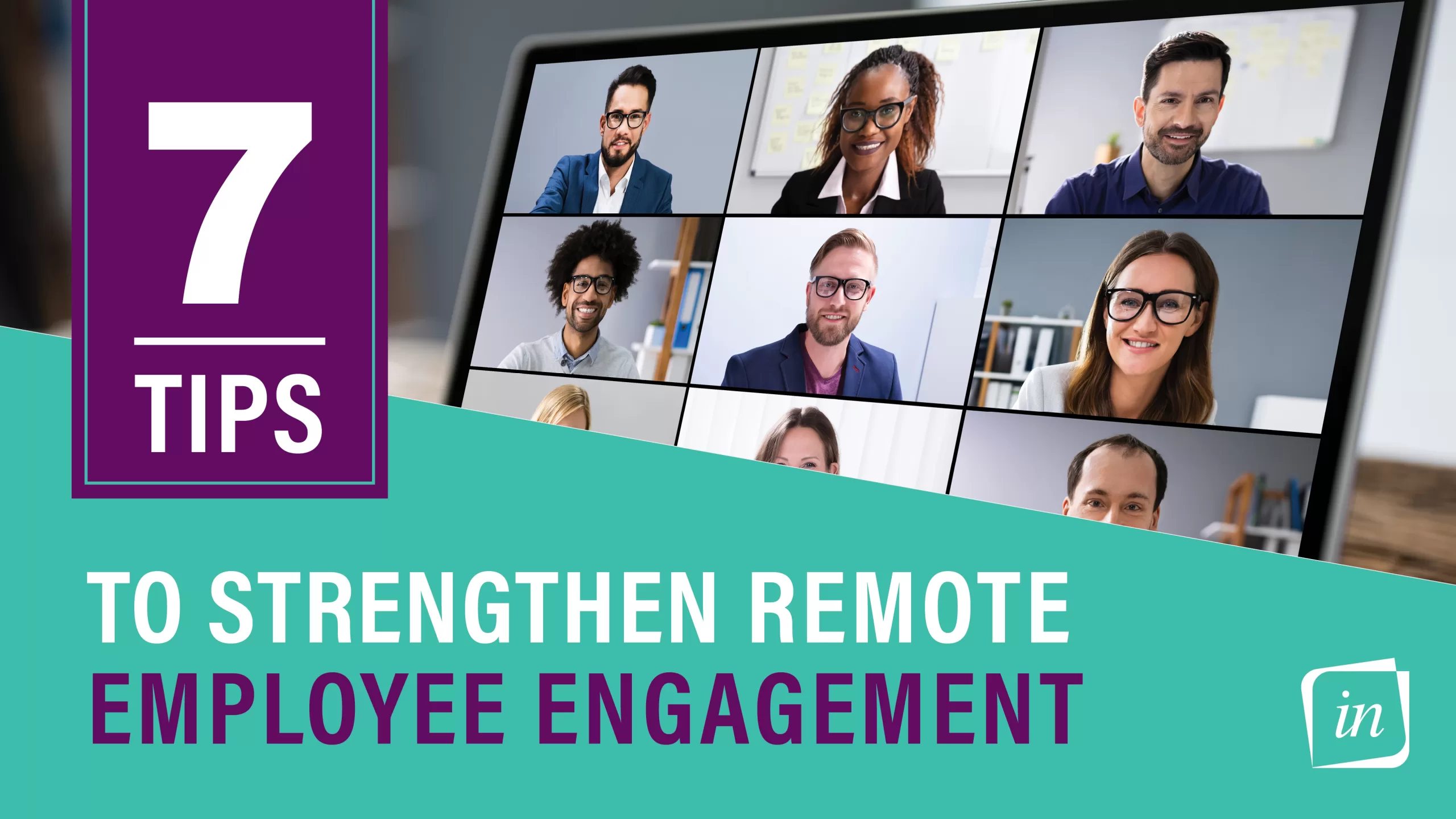
Managing remote employee engagement involves balance and flexibility. Communication, inclusion and maintaining connections with colleagues becomes a priority. This is difficult enough when we are physically collocated! When we work alone, behind a computer or phone, it becomes a serious challenge. This means, yes, some extra work: being mindful, intentional, and persistent. But the results — healthy work relationships and productive, engaged employees — are well worth the effort. Here are our seven most important tips for strengthening remote employee engagement.
1. Stay Curious
Be curious about the person behind the computer. Actively learn more about your coworkers and what matters to them. If you’re a leader, regular one-on-one check ins and team check ins are vital. Neglecting to do these things can slowly tank remote employee engagement.
2. Assume Positive Intent
Think about how many times you’ve probably misinterpreted a text message and created your own narrative about a situation. Perhaps you asked an acquaintance to dinner and she just responded “can’t.” You felt startled by the curt reply, and you started thinking “did I do something to offend her recently?” or “why is she so rude?!” You start making assumptions. The information you didn’t receive was that your friend had texted this short reply while frantically jostling two kids into the car to go to the grocery store.
Working in a virtual setting, we have to account for the social cues and emotions that get lost. Start by assuming your colleague is coming from a positive place, which can help mitigate any potential misunderstandings. And when you have faith in someone’s positive intentions, you trust them.
3. Connection Breaks
Routines in the office like getting coffee, picking up the mail or meeting at the water cooler typically offer consistent opportunities to be social and chat with co-workers. Working remote or hybrid, we must consciously replace these routines with alternatives. Consider both planned and impromptu “coffee breaks,” when colleagues can talk. “Don’t just ‘get straight to business,’” advises Priya Parker, author and master facilitator. Start each conference call with a check-in or opportunity to chitchat. These small experiences add up and positively affect remote employee engagement.
4. Take Turns
A good lesson for adults, not just kids! For instance, be conscious about taking turns and allowing everyone to speak on conference calls. Without visual and/or social cues, it can be easy for dominant individuals to steer conversations.
5. Ask for Input
It’s important to collect feedback and ideas from a variety of colleagues whether you’re working in person or not. However, “in a face-to-face meeting, you’re able to tell how people are doing by monitoring their body language. In a virtual meeting, you need to regularly stop to take everyone’s temperature,” writes Nick Morgan in the book Can You Hear Me? Deliberately and consistently seek input from everyone during conference calls.
6. Put the Other Person First When Communicating
Good communication in a remote or hybrid environment starts with putting the needs of others first. When you’re the sender, always try to think about who is receiving the message. Consider their communication style, if you know it, and any barriers you might encounter. With the person in mind, choose the most appropriate communication channel and be as clear and as specific as possible.
7. Set Expectations
Setting clear expectations allows teams to cultivate trust and accountability. Working virtually or semi-virtually adds layers of complexity, and it’s even more critical for leaders and teams to discuss and set clear and meaningful expectations. Some factors to consider include determining communication norms (e.g. when and how often to communicate and reasonable time frames for responses) and knowing when colleagues are available (e.g. can everyone see people’s calendars?).
Successful remote employee engagement leads to much higher wellbeing. It goes far beyond the “warm, fuzzy” aspect, strengthening business outcomes across the board.