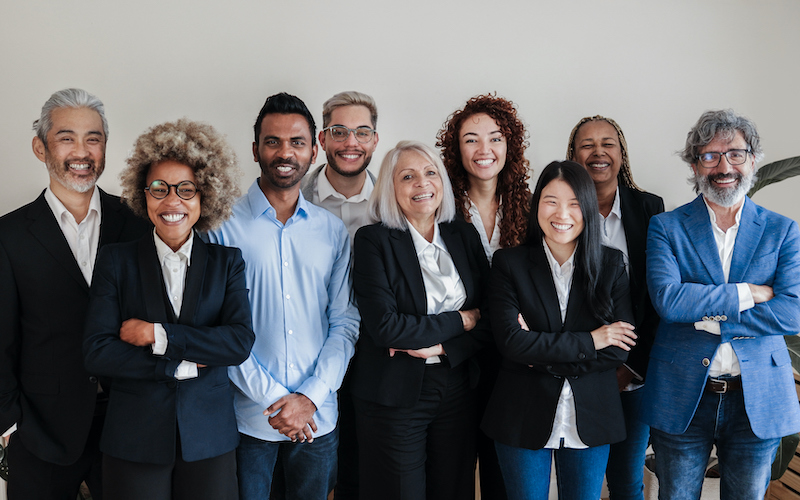
Language is a reflection of our culture and society. Intentionally or not, our words can minimize or exclude people, particularly those in underrepresented people groups. This includes people with disabilities, people of color, people with diverse gender identities, and more.
These inclusive language examples allow us to learn to communicate more respectfully so that everyone sees themselves reflected in the conversation. At Inclusity, we mindfully try to use language that avoids words or phrases that reflect stereotypes or serve to subtly exclude any individual or group of people. You can begin to practice using more inclusive language by increasing your awareness. Inevitably, you’ll notice just how embedded biases are in the culture. Here’s some things to consider.
Terms to avoid and inclusive language examples
Avoid unintentionally centering the dominant culture or perpetuating a “them and us” mentality.
Minorities, Disadvantaged –> Underrepresented, Underserved
Set aside any assumptions about the background and preferences of others. Use neutral words related to gender, sexual orientation, and other distinguishing qualities.
Him / her –> They
You guys –> Folks, All
Husband / wife –> Spouse, Partner
Cleaning lady –> Cleaner
Focus on relevant characteristics. Is it even necessary to mention gender, race, disability, etc.?
Avoid using adjectives as nouns to label people, or labels that equate people with their condition.
The gays –> Gay men / women
Drug users –> People who use drugs
The elderly –> Older adults
Use person-first language when possible, keeping in mind that some communities (e.g. the deaf and autistic communities) value identity-first language.
Mentally ill people –> People with mental illnesses
Disabled/handicapped person –> Person with a disability
Homeless person –> Person who is unhoused, person experiencing homelessness
Consider the historical, cultural, and religious context and implications of words and phrases.
Slaving away –> Working hard
Pow wow –> Huddle
Avoid phrases that condescend, suggest victimhood, or that reflect or project feelings and judgments about a person.
Rape victim –> Rape survivor
Afflicted by AIDS –> Living with AIDS
Handicapped –> Person with a disability
Avoid terms that reinforce stigma.
Drug addict –> Person with a substance abuse disorder
Obese–> Fat, plus size, bigger bodied
Shifting our language involves putting the person first — both in our minds and in our words. Rather than a defining category, recognize them as an individual first. Using more inclusive language requires not making assumptions about people, managing our judgements, and using more neutral words.
Unfortunately, there are many words and terms in the English language that can be insensitive (or worse) toward certain people groups. We probably aren’t aware of many of them! For instance, have you thought about these terms:
- Hold down the fort
- Low man on the totem pole
- Pow wow
We might not stop to think that they can be dismissive or derogatory to Native Americans / Indigenous people. Our language is also replete with terms that reference slavery or that reinforce the bad/good binary of black/white. Including:
- Sold down the river
- Grandfather in
- Slaving away
- Master
- Blacklist
- Blackball
Such terms can carry painful historical weight for many people. It’s worth learning and thinking about the context of certain terms and how/why we use them.
While language is powerful and can help promote a more inclusive culture, we also shouldn’t police our language to the extent that we tiptoe around sensitive topics. It’s not about shame or guilt for using a word that could be considered offensive. Mistakes happen; ask if you don’t know and apologize if you make a mistake!
Using more inclusive language is about open-mindedness and re-learning, so that you’ll be more attuned and can start to shift the words you might use. For more extensive inclusive language examples, refer to this American Psychological Association guide. And remember: Language is always evolving, and we need to keep a growth mindset about this – we’re all learning here!