
Introduction to Inclusive Leadership
Training to build the foundation of a diverse, innovative, and productive workplace culture.Today’s leaders must be able to effectively communicate and build trusting work relationships with many different kinds of people. We are moving from the era of “command and control” to an era of “engage and include.”

Some individuals have a natural ability to feel comfortable with many different types of people and can easily build camaraderie within their teams. Others are comfortable exhibiting inclusive behaviors themselves but have difficulty coaching and developing these skills among those who report to them. And still others have difficulty establishing comfortable working relationships with specific people or groups.
According to the Gallup Organization, disengaged (exclusive) managers are three times
more likely to have disengaged and actively disengaged employees, costing businesses
billions of dollars in lost revenue each year. If you are working to create a culture that values all employees and is inclusive of differences, your leaders must understand what inclusion is, how it is achieved and what specific behaviors and actions they can take to promote the culture you desire.
Inclusity’s Introduction to Inclusive Leadership Workshop (or series) provides your supervisors, managers, and leaders the personal insight and awareness, knowledge and skills they need to become the best and most inclusive leader possible.
In this four-, eight-, or 12-hour workshop (or series of shorter workshops if desired) we introduce your leaders to up to four Inclusity Models and the tools they need to actively become inclusive leaders.
Learning Objectives:
- Participate in and lead small group discussions about the factors that define their team members, in order to build trust and open communications
- Understand the attitudes and behaviors that create exclusion
- Identify situations in which team members are being excluded
- Increase their commitment to actively include instead of unintentionally excluding
- Utilize models presented during the training to intentionally create more inclusive workplace teams
From The Inclusity Blog

Beyond Pride Month: Establishing an LGBTQ+ Inclusive Workplace
Every June, businesses celebrate Pride Month to show their support for the LGBTQ+ community; however, true allyship requires advocacy beyond one month a year. The LGBTQ+ community and its allies need businesses to activate beyond Pride Month and stand behind the community year-round. Corporate America can demonstrate their true commitment through actively working to reduce workplace discrimination and supporting employees who identify as LGBTQ+ in the workplace.
Internationally recognized events like Pride Month should remind us of the importance of fostering fully inclusive workplaces. Instead, many companies fall prey to the phenomenon of “rainbow washing,” which is when businesses align themselves with Pride for personal gain, rather than to genuinely support the LGBTQ+ community. Examples of rainbow washing include public gestures of support such as corporate groups marching in parades, corporations adding rainbow colors to their logos, changing social media avatars, publishing support statements at the start of Pride Month, and using a rainbow to push products — all without the benefits of an LGBTQ+ inclusive workplace. For example, one Fortune 500 corporation updated its Instagram profile picture to include a pride flag despite donating nearly $1 million to anti-gay politicians.
Creating a genuinely inclusive culture means taking year-round action. How can businesses or organizations celebrate and support LGBTQ+ employees beyond Pride Month? There are ways to give more meaningful support to the LGBTQ+ community through intentional and concerted effort to build an equitable and inclusive workplace. The suggestions below promote LGBTQ+ representation and equality in the workplace through actionable steps:
-
1. Policies Should Be the Starting Point
Set and enforce policies to protect LGBTQ+ employees such as non-discrimination (including sexual orientation, sexuality, and gender identify) and anti-harassment policies to ensure workplaces are free of discrimination and subtle acts of exclusion (microaggressions).
-
2. Offer Inclusion Training
Provide diversity and inclusion training that addresses sexual orientation and gender identity, formal LGBTQ+ awareness training programs, as well as inclusive management training.
-
3. Commit to Inclusive Hiring Practices
Level the playing field for all candidates with practices including inclusive job descriptions, bias awareness training for hiring teams, and diverse interview teams.
-
4. Promote Formal LGBTQ+ Allyship
Allies are influential colleagues who openly champion and support LGBTQ-inclusive policies and employees. Allyship can take many forms, including implementing programs like Culture Champions, which provide participants the skills and tools to role model and foster inclusion.
-
5. Support Employees with Climate Surveys
Conduct research to better understand the culture for employees who identify as LGBTQ+. The purpose of the research is to identify issues and concerns that impact the organization’s ability to have a welcoming and inclusive environment.
-
6. Expand Benefits
LGBTQ+ employees often face disparities in access to healthcare and benefits such as parental leave. Offer paid family leave to include LGBTQ+ employees and same-sex benefits. Gender affirming health care benefits allow gender-diverse people to maximize their overall health and psychological well-being.
-
7. Establish an LGBTQ+ Employee Resource Group
Promote inclusivity and belonging through an LGBTQ+ ERG. An employee-led affinity group addresses the unique needs of the community and improves the working environment for hiring, retaining, and advancing LGBTQ+ employees.
-
8. Support Events Beyond Pride Month
Engaging with the LGBTQ+ community beyond obvious events, such as Spirit Day, can send a strong message about a business’ commitment to diversity.
Supporting LGBTQ+ employees can look different from company to company, but the main goal is that every employee feels supported and valued. Employers have a responsibility to make sure all employees feel seen and supported in bringing their true and authentic selves in the workplace. If your company is interested in talking with Inclusity to ensure that you’re providing a truly inclusive work environment for all employees, we’re here to help.

Rules of Engagement: 5 Ways to Increase Employee Engagment
It’s Time to Focus on Employee Engagement
The studies are clear. Employee engagement affects business performance, and job satisfaction. But what does engagement mean and how do you drive it in the workplace?
Simply put, engagement is the connection employees feel with their organization. With decades of research on this topic, Gallup defines employee engagement as the involvement and enthusiasm that employees have in both their work and workplace. Various factors contribute to engagement, including professional development opportunities, employee wellness programs, strong relationships with colleagues, and a supportive environment in which they are valued. An inclusive, diverse culture is the foundation for high employee engagement.
When organizations capitalize on the strengths and unique value of their employees, they create a work environment where employees are truly engaged. If individuals cannot be their authentic selves at work, they won’t be as engaged and are more likely to leave, report Kenji Yoshino and Christie Smith in their book Uncovering Talent: A New Model of Inclusion. A company’s ability to attract a highly diverse workforce and build a truly inclusive culture result in increased employee engagement, reduced employee turnover, improved productivity, and greater profits. In today’s climate, companies must take proactive steps to increase employee engagement or risk losing their workforce.
How can your organization nurture an inclusive culture, creating positive employee experiences and a workplace where employees feel safe to bring their whole selves to work? Here are some options to explore:
Employee Resource Groups
Encourage and fund employee resource groups (ERGs) that represent diverse identities. An ERG group is comprised of employees with a shared background, experience, or interest, such as ethnicity, gender, or parenting. Each group builds a strong sense of belonging and community and offers a safe space for open discussions. ERG programs advance a respectful and inclusive company culture and provide both personal and professional support to participants.
Work-Life Balance Programs
The goal of work-life programs is to enhance the workplace for an increasingly diverse workforce. This could mean providing flexible working hours or options that support families, like childcare. Work-life balance means acknowledging that each employee is a whole person, with personal factors and experiences that affect their work. Supporting their needs is important for making the workplace inclusive — and that leads to greater engagement.
Mentorship and Sponsorship
We know that mentoring matters for professional advancement. For employees in marginalized groups, it’s even more critical. To ensure their inclusion, proactive sponsorship is necessary. Mentors and coaches can help mentees improve both ther hard skills that are important to productivity and soft skills that create a more inclusive and dynamic work environment.
As Rosalind Chow writes in a Harvard Business Review article, “Allies need to not only offer the emotional support of mentoring but also be intentional about identifying opportunities for sponsorship and using our social capital to lift up those who might otherwise go unnoticed.”
Inclusion Training
Providing learning opportunities to all employees can offer more than professional growth. Interactive training that delves into diversity and inclusion like overcoming biases and identifying micro aggressions enhances employees’ awareness and skills. These types of workshops are important building blocks for creating an inclusive, engaged workplace.
Celebrate holidays and events
Diversity initiatives for underrepresented cultures and backgrounds like Black History Month, Chinese New Year, and Pride Week are a valuable way to help every employee feel represented at work. Celebrating and learning about each other’s customs and traditions fosters a culture of inclusion that makes employees feel recognized and valued.
If you’re looking to drive employee engagement, start with inclusion and embrace diversity. And if you’re looking to understand just how to do that, contact us here.
Don’t Miss a Connection
Inclusity starts each inclusion training session with a “connection.” This is more than just a euphemism for those (sometimes-corny) ice breaker activities that add levity to a workshop, if little substance.
Often our connection exercises ask participants to introspect (to connect with themselves, if you will). Then comes the sharing and listening to each other, which is where the real connections start to be forged. We reveal our humanness, acknowledge our diversity, and, most importantly, realize our similarities — where we connect.
“We connect people first, as opposed to focusing on differences first,” says Maria Arcocha White, CEO and founder of Inclusity. “We start the conversation around what is common for them; that builds trust, that enables conversation, and that facilitates communication.”
In an increasingly disconnected world (in spite of the ubiquity of technological connections), these in-person activities are vital.
“Connection is important,” writes Ken and Scott Blanchard in Fast Company. “People who feel connected to their leader are more likely to feel good about their jobs, stay with the organization, and act in ways that support it. Without connection, people feel out of the loop. This leads to isolation, a lack of well-being, and possible disengagement.”
Inclusity fosters connections to deepen people’s awareness and build foundations for inclusive cultures. “Our approach brings people together, and then once we bring them together, it’s way easier to talk about the differences,” says Arcocha White. “Ninety-eight percent of people on this earth are well-intentioned, good-hearted people who want to have good relationships and want to be successful in the workplace. But they just don’t know how to deal with difference effectively.”
She adds: “When people feel heard, valued and that they belong, they engage and contribute to their maximum potential.”
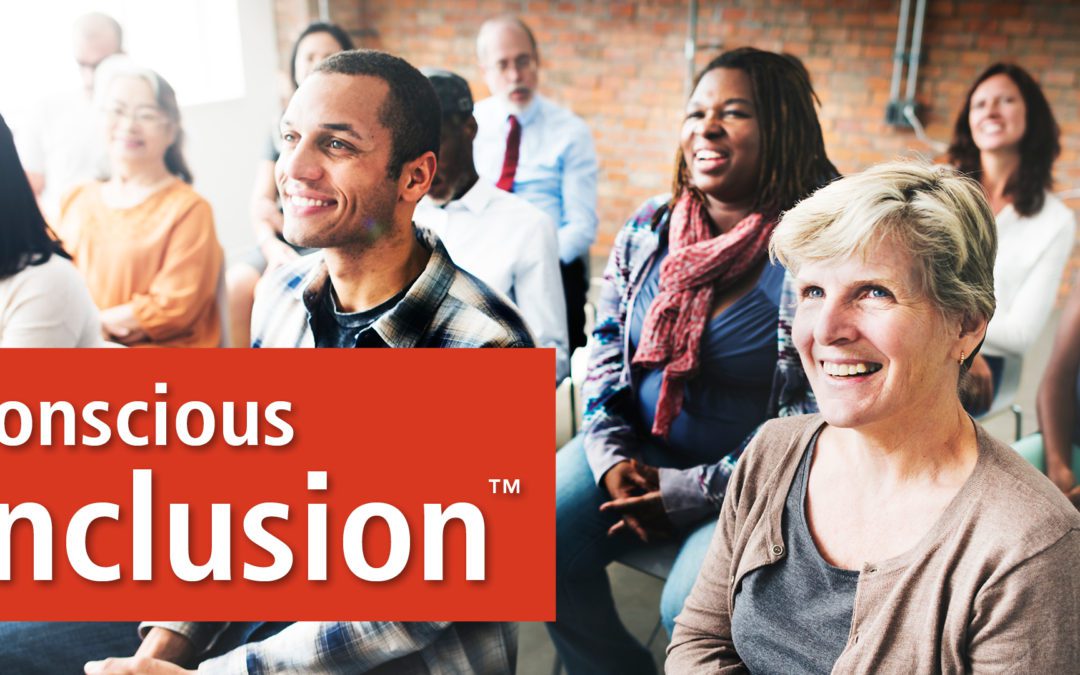
People can experience Inclusity’s positive approach to inclusion and diversity training at a Conscious Inclusion workshop. The three-hour workshop’s discussions and interactive activities help participants understand and recognize unconscious bias and how it affects culture and business productivity. Participants will then learn practical tips to be more intentionally inclusive.
It “opened eyes to things happening everyday, and now I feel in a better place to handle them,” one past participant shared. Another commented: “I have attended many diversity and inclusion workshops, and this was by far the most engaging and beneficial.”
Inclusity facilitates Conscious Inclusion workshops at businesses and organizations across the country. Talk to us if this sounds like it might be a good fit for your organization or if another inclusion and diversity training program could work for you. We’re holding a public Conscious Inclusion workshop in Indianapolis on Oct. 15 from 9 a.m. to noon, if you are interested in participating, click here or call 317-716-7678.

Inclusion: Driving Leaders and Business Outcomes to the Next Level
Inclusive Leaders
How many of us, at some point in our lives, have felt like we were an outsider – no matter how hard we tried to fit in? Who hasn’t attended a meeting and posed a thought-provoking question to only be met by the sound of “crickets,” or mustered up the courage to attend a social event or walked up to a group of people engaged in conversation and felt awkward and excluded? Merely bringing together a diverse group of people does not assure meaningful engagement, high performance or even a pleasant experience — we must focus on inclusion and inclusive leaders.
Today, companies are finding that inclusiveness is not only desirable for team success and the right thing to do, it is essential to business performance. This necessitates inclusive leadership – leadership that assures that all team members feel they are treated respectfully and fairly, are valued and sense that they belong and are confident and inspired. And research backs up this idea.
By the Numbers
Not only has research shown that inclusion impacts perception of business performance, it correlates to actual business performance. Harvard Business Review’s article “Why Inclusive Leaders Are Good for Organizations, and How to Become One” makes the business case. The article points out that teams with inclusive leaders are 17% more likely to report that they are high performing, 20% more likely to say they make high-quality decisions, and 29% more likely to report behaving collaboratively. Furthermore, they found that a 10% improvement in perceptions of inclusion increases work attendance by almost one day a year per employee, reducing the cost of absenteeism. This is a game-changer.
Leading the Way
Senior leaders and managers often carry a heavy load, at times even more than they realize. Employees’ perception of leaders and their behavior can have far-reaching influence and weigh heavily into their feeling of inclusion within the organization. You might ask if the qualities that make for a good leader in general are the same as an inclusive leader. Recent research by Deloitte found six traits “that distinguish inclusive leaders from others: visible commitment, humility, awareness of bias, curiosity about others, culture intelligence, and effective collaboration.”
Based on our training and coaching experience, Inclusity finds these traits important, along with others that we have identified during our decades of experience. We are moving to a leadership model of “engage and include,” in which specific behavior and actions can help to promote and achieve an inclusive culture. This is a culture that encourages productivity and engagement. Delivering meaningful culture change through inclusive leadership takes all these behaviors and an ongoing commitment to lead every day by example.
“It’s only after you’ve stepped outside your comfort zone that you begin to change, grow, and transform.”
– Roy T. Bennett
Diversity + Inclusion = Transformation
Building inclusive and diverse teams is not just good business. It allows individuals to bring their “whole” self to work while maintaining a sense of connectedness and safety. Without these experiences, how are we to build a solid foundation of trust? Are we going to remain confident and collaborative in the work environment? We have learned there are many benefits to a balanced focus on D&I; let’s look at innovation, customer satisfaction, and reduction of risk.
Innovation has proven to be a critical factor leading to success in business. It can set your business apart and oftentimes provides a competitive advantage. How does one create a diverse workplace environment that encourages and cultivates innovation in a global market? Inclusion. We have come to understand a strong correlation exists between inclusion and innovation; diverse perspectives ultimately enhance problem-solving and generates better ideas.
Customer satisfaction is highly dependent on exceptional customer service. Today’s customers are savvy; many are seeking authentic messages of equality that resonate with their personal values, thereby reflecting in their spend and social media “voice.” So, a diverse and inclusive workforce can provide organizations with a competitive advantage. As demographics change, organizations may depend on employees who offer different perspectives — employees who represent and understand the diverse backgrounds of the customers, clients and communities they serve.
What transpires when we bring together a group of diverse individuals who feel empowered, share their ideas openly, recognize their worth, and fully engage? When led by inclusive leadership with a strategic goal the probable result is a high-functioning team. Picture individuals of diverse backgrounds, knowledge, experience, gender, etc., sitting around the table exchanging ideas, challenging the status quo, sharing their expertise, and solving complex problems. This is where the magic happens: risks are mitigated, gaps identified, and cost savings realized.
Deloitte conducted research that captured the experiences and views of 1,550 employees in three large Australian businesses, which supports this concept. They found “that diversity of thinking is a wellspring of creativity, enhancing innovation by 20% and enabling groups to spot risks, reducing these by up to 30%”.
Why Lead with Inclusion?
The data has shown that diverse teams outperform others. They are also more innovative, provided they manage their diversity, practice inclusion, and leverage both their similarities and differences. Doing these things effectively can bring your organization to a higher level of performance.
Since its inception, Inclusity has embraced a holistic approach toward D&I work. We believe success lies where inclusion and diversity meet: a high energy, productive and collaborative environment in which all individuals are affirmed and valued for their unique contributions. To learn more about our Conscious Inclusion workshop or other training, coaching and consulting to build a culture of inclusion at your organization, please contact https://www.inclusity.com/contact/.

Empathy and Leadership
“It is only with the heart that one can see rightly, what is essential, is invisible to the eye.” – The Little Prince
Why is Empathy and Leadership so Important?
We are presented with a steady stream of messaging that encourages us to embrace others and see the world through their eyes. On the other hand, there are those that suggest empathy can be fraught with challenges, especially for those in leadership. In fact, in the book Against Empathy: The Case for Rational Compassion, Paul Bloom argues that empathy can impair judgment.
For me, the challenge is not about taking my “empathetic” self to work but to refrain from being immersed in the situation. Empathy is as natural to me as breathing air – absorbing others’ vibes, putting myself in their shoes and “feeling” their pain.
Early in my career, I set aside my natural tendencies toward empathy and attempted to not ‘‘show up”. What I conveyed to others and what I felt internally were not aligned. This felt disingenuous. Through this experience I quickly realized that being myself was the only choice and made the personal decision to be authentic.
With a previous employer, I was faced with closing a division within the company. Working through the transition, moving a group of dedicated employees and loyal customers to a state of being displaced workers and customers without much needed services, was devastating. Trust me, I am by no means a hero, but to this day I am convinced that what happened next was due in large part to being in tune with my feelings of empathy.
My capacity for understanding propelled me forward and gave me the courage to ask leadership to consider and approve a different plan. Collectively, a few of us went on to move mountains, keeping the division open long enough to identify another source for our loyal customers and offer alternative employment to staff members. In fact, the team bond was strengthened and three of those individuals went on to work alongside me in another division. I believe demonstrating empathy in the workplace is key and we can’t lead effectively without it.
Empathy is also key to building an inclusive work environment where a business and its employees can thrive. Leaders must be able to effectively communicate and build trusting work relationships with different kinds of people. Some individuals have a natural ability to feel comfortable with different types of people and can easily build camaraderie among their co-workers and subordinates. It’s a mark of strength – a balance of intelligence, self-awareness and understanding.
Recently I attended a training class designed to help define yourself, what connects you to other, and why. I took away a better understanding of how important it is to recognize and value every part of myself. Empathy is the core of emotional intelligence and how can you possibly be a leader without it. That’s why empathy and leadership are intertwined.
One thing I know for sure is that I must recognize and value every part of myself. And I am not alone, Lucas Pols echoes my sentiments in his Forbes article, “The Importance Of Empathy In Leadership” where he states, “The ability to get out of your own mental framework and put yourself in other peoples’ shoes is essential for impactful communication, crisis management, business strategy, sales and marketing and successful business.” Forbes article. Simply – I am a work in progress.