Spring cleaning isn’t just for your garage. That “refresh-renew-re-think” energy you get when the temperatures begin to rise and the daylight hours get longer? Don’t leave it at home. It’s important to carry it with you into the workplace.
The beginning of the year is an excellent time to apply the spring cleaning mindset to reviewing your organization’s policies and procedures.
The case for a closer look
Policies and procedures do more than help organizations run smoothly – they shape employees’ experience and engagement. Ways of working and systems shape how employees have access, communicate, hire, and more. Outdated or exclusive policies and procedures can actively hinder an organization’s efforts toward a fair and equitable workplace. In addition when organizations adapt to become more accessible and inclusive, they benefit from diversity of talent and perspectives, which positively affects innovation and productivity.
Examining current policies and procedures can offer key insights into the relationship between written policy and workplace climate.
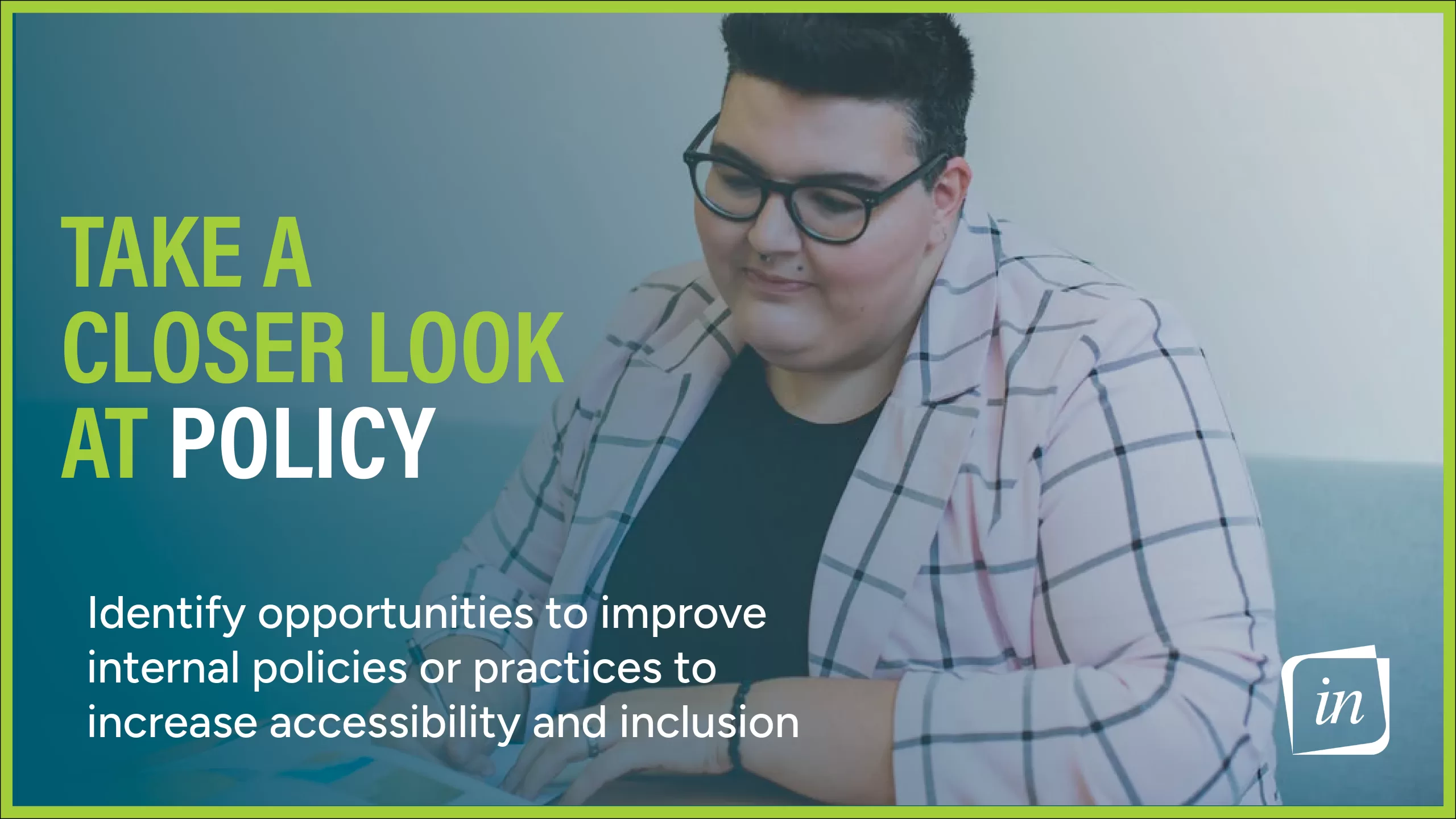
Analysis helps identify opportunities to enhance internal policies or practices so that they can be as inclusive and equitable as possible.
“Cultures that lead to talent staying around don’t arise from mission statements or isolated policies” says the Harvard Business Review. “Rather, they are a function of systems where core practices align, where hiring models, pay structures, and advancement philosophies, whatever they are, reinforce one another. Employees respond to that alignment by demonstrating significantly higher levels of commitment”
Removing Barriers to Access
Because exclusionary or biased policies are the antithesis of a healthy organizational culture, accessibility and inclusion are arguably the most important things to check for when reviewing policies. It’s also important to include people with disabilities in the conversation; input by those with lived experience is the only way to improve representation of marginalized groups. Currently, the U.S. lacks representation of people with disabilities in the workforce. According to U.S. Bureau of Labor Statistics data, the unemployment rate of people with disabilities, who are able to work, is 9%, compared to 4.6% for people without a disability.
Disability covers a broad range of conditions, many of which are not always visible or obvious when interacting with someone, and in general, people’s experiences of the workplace vary widely. Chronic health conditions, post-traumatic stress disorder, dyscalculia, and sensory processing issues are just a few examples of disabilities that policy-makers may not know their colleagues or employees are living with. Leaders must consider accessibility through the lens of all types of conditions that may inhibit it.
Along with evaluating whether policies restrict access to anyone, it’s also important to consider whether policies can help empower the inclusion and participation of all employees.
Recognizing and Revising Past Practices
“Changing policy is one way to turn the page on poor cultural practices of the past”, says Inclusity’s Director of Research and Evaluation, Mitchell Campbell. “We tend to underestimate how sticky culture is: the ideals of an organization’s original leaders are often codified in written policy, which shape the culture long after they depart. Writing new policies helps to interrupt a culture’s self-reinforcement, leading to productive change.”
Frequent review and reconsideration are important as the faces of your organization change. If you hire new employees or have team members moving into new roles, it will be essential to review policies and procedures to ensure fairness and set each member of your organization up for success.
Review & Revise Policies and Practices from a Fair and Inclusive Lens
Inclusity’s Inclusive Policy Toolkit provides users a comprehensive guide (which can be paired with live virtual consultation) to refresh and reframe the elements that make your organization what it is, or what you want it to become.
In particular, we look at processes for hiring (including position descriptions, diversity of interview panels, etc.), promotion, development, and succession planning. We offer recommendations for creating more inclusive language and procedures, as well as an accessibility audit.
Policy making with inclusion and accessibility in mind ensures that steps in the right direction are not fleeting but are codified for years to come.