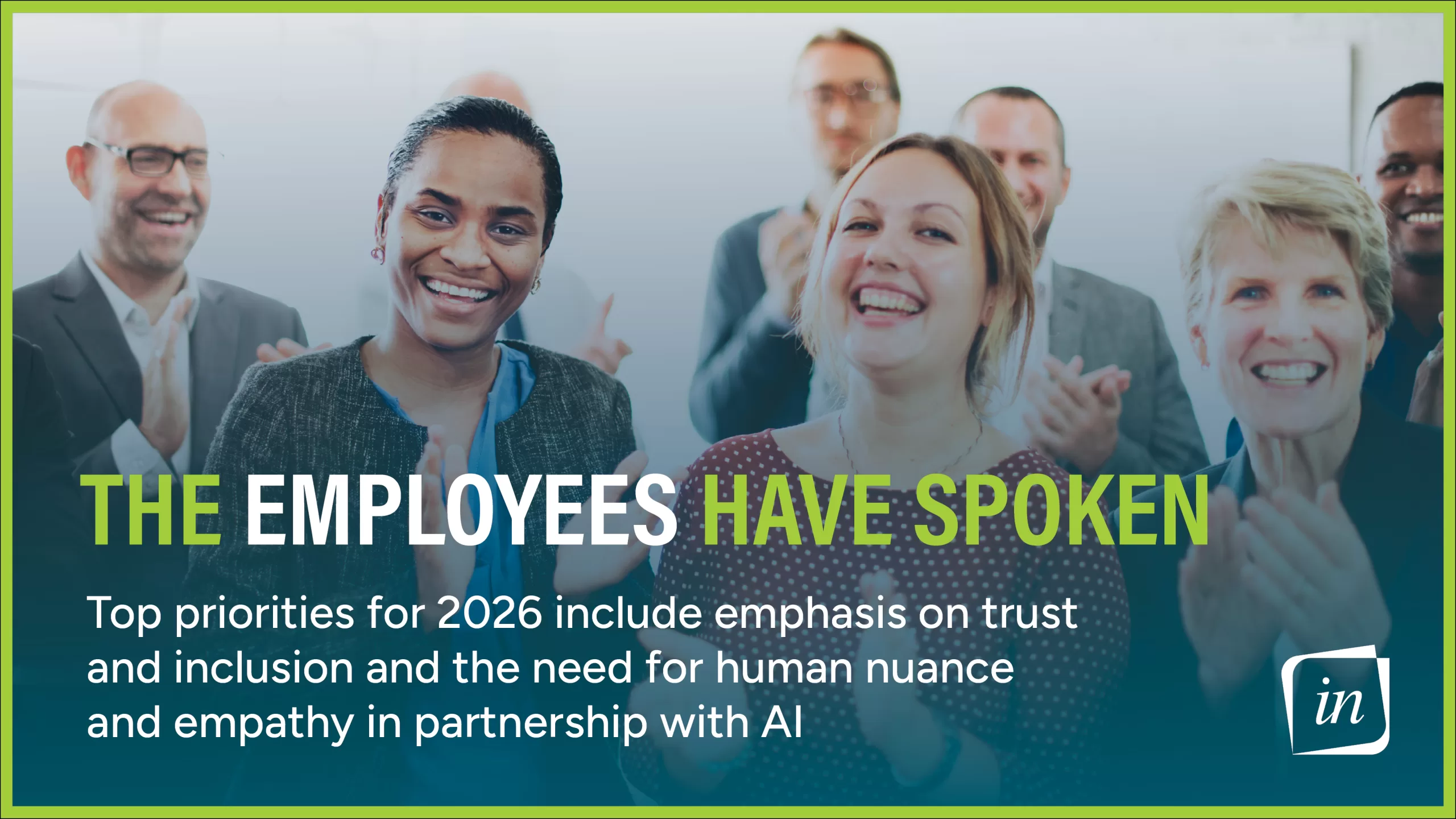
‘Tis the season for annual planning and trend forecasting. So, what’s top of mind for business leaders as we barrel toward 2026? One might assume it’s increased reliance on AI, or tuning out anything that doesn’t directly contribute to the bottom line. However, research and survey data indicate that companies’ priorities may look different in the new year.
An Investment in Employee Engagement
Many companies will be heading into 2026 unable to offer bonuses or merit increases due to budget constraints. Promotions may not be possible. Hiring freezes will limit leaders’ ability to lighten the load for their employees.
As a result, many leaders have realized that if their ability to pay and promote is hindered, they will need to find other ways to recognize and retain their workforce. Companies are leaning into alternatives that will benefit their people as well as their bottom line. Offering expanded training and re-training to build out employee skillsets is one option. Investing in activities that promote trust-building and feelings of connectedness and inclusion will also be prioritized in 2026.
According to Workplace Intelligence, the challenge for employers boils down to efficiency versus employee engagement. If companies rely too heavily on hiring freezes, they risk undermining morale – but proactive communication and investments in training and professional development can help keep morale and employee engagement on an upward trajectory.
As our Founder & CEO Maria White highlighted earlier this year, Inclusity has always believed that creating inclusive workplaces will lead to workforces who are engaged, empowered, and contribute to their fullest potential. Because there’s such a strong link between employee engagement and productivity, inclusive cultures also improve business results. Research backs that up; Deloitte reported that organizations that establish inclusive cultures are twice as likely to meet or exceed financial targets and eight times more likely to achieve better business outcomes.
Re-Thinking DEI
While we may not see DEI policies explicitly outlined on company websites in 2026, inclusivity has made its way back on to the priority list. “Unsurprisingly,” says The HR Digest, “employees want to feel accepted and welcome into their workplaces and work with employers who can guarantee their physical and psychological safety.”
Leaders would do well to head into 2026 with the goal of reconnecting with their people and working to re-build bridges burned by this year’s challenges. Return-to-Office mandates, increased workloads and feelings of alienation and loneliness have dominated the culture conversation as of late, but it doesn’t have to be that way. While RTO policies may be here to stay, companies that set such policies with empathy and a willingness to listen and adapt to employee’s needs will see better employee retention and engagement than those that remain rigid.
Human + AI Collaboration
The key concept for companies using AI in the new year will be collaboration. AI has unquestionably accelerated many aspects of doing business – data gathering, trend spotting, analysis, just to name a few. This valuable assistance can absolutely lead to increased efficiencies for organizations, but only if it’s coupled with human insight.
According to Robert Half’s 2026 HR Forecast, “AI can accelerate analysis, but humans understand nuance, culture and context. The most effective HR teams will combine data with empathy to make decisions that are faster, fairer and more aligned with organizational values.”
Successful use of AI in 2026 will look like companies coupling data and information with human insight and instinct. To that end, governance of AI is gaining importance, and in some cases, will result in the creation of new organizational roles in the coming year. Appointing leaders to govern the use of AI to ensure fairness, build cross-functional trust, and quiet unnecessary noise, allowing human partners to perform better in their roles, will be an essential piece of the puzzle.
AI, rising costs and cultural differences may threaten to disrupt and divide the workforce in 2026. However, companies that take the right approach to handling those very challenges can engage and unite their people, instead. Employers that invest in training and trust-building will see improved productivity and employee satisfaction. The ethical and strategic adoption of AI by real people that can add the human element, can mean endless opportunities for organizational growth.